
Jakarta, October 2, 2026 - Entering its 39th year in Indonesia's property industry, LippoLand continues to expand its role from a township developer to a property enabler, seeking to deliver housing solutions that are increasingly relevant to the needs of the public and the development of housing in Indonesia.
LippoLand's journey began in 1987 with the development of Lippo City and later Lippo Village. Over nearly four decades, that journey has grown through a wide range of townships and property products reaching diverse segments of society. For LippoLand, however, its 39 years of experience is not only about how many townships have been built, but about how that experience can remain relevant to the changing needs of Indonesian society.
LippoLand CEO David Iman Santosa said that this long journey carries a responsibility to keep understanding the problems and aspirations of the public. “For 39 years, LippoLand has grown together with Indonesia. That is why we do not only want to observe how the property industry develops, but also how we can remain relevant and contribute to the needs of society, including in the matter of housing,” said David.
Staying Relevant to Indonesia's Housing Needs
One of Indonesia's biggest challenges is the continued large need for affordable housing. With a home ownership backlog that still stands at around 9 million families, providing housing cannot be the responsibility of a single party. Broader participation is needed from developers, the banking sector, and various stakeholders, including the government.
In this context, LippoLand seeks to draw on its 39 years of experience to deliver basic housing that is increasingly affordable and accessible to more people. One way is through the development of homes priced from around Rp100 million, with an installment scheme of around Rp600 thousand per month.
LippoLand has sold around 5,000 units in this housing segment. However, David believes the scale of the national need is still far greater, so a collective contribution from the entire housing ecosystem is required.
“The backlog figure of around 9 million families shows that Indonesia's housing needs are still very large. We realize that LippoLand cannot possibly meet this need alone. Broader participation is needed from all developers, banks, the government, and the entire housing ecosystem. What we can do is use our 39 years of experience to try to deliver, and to serve as inspiration for, relevant solutions,” said David.
Efforts to remain relevant to Indonesia's needs are also realized through other contributions. One of them is the donation of approximately 30 hectares of land in the Lippo Cikarang area to the state, as part of LippoLand's commitment to contribute to the needs of society and to broader interests.
Growing Together with Partners
LippoLand's 39-year journey has also not been built by the company alone. Behind every township and product delivered is an ecosystem of partners who have grown and contributed alongside it, ranging from banks, consultants and sales agents, planners, contractors, and city service providers, to various other stakeholders.
David said this journey has led LippoLand to see partnership not merely as a business relationship, but as part of an ecosystem that jointly builds townships and creates value for society.
“LippoLand has grown with many partners. There are banks that help provide financing, consultants and sales agents who help us understand and serve consumers, planners and contractors who translate concepts into townships and buildings, and city service providers who ensure that townships can continue to thrive and develop. All of them are part of LippoLand's 39-year journey,” said David.
Beyond building townships and products, the journey is also directed inward through the development of LippoLand's people. The company believes that the sustainability of its 39-year journey depends not only on assets and products, but also on the quality of the people who carry it forward.
“Internally, we also want to develop LippoLand people into holistic individuals, with values, character, and integrity that are reflected not only in their work but also in their lives. Because in the end, a company is built by people,” said David.
In 2025, LippoLand recorded pre-sales of Rp5.32 trillion with sales of 6,047 units. Its portfolio reaches various segments, from Essential and Affordable to Premium and Ultra Luxury. For LippoLand, this diversity is part of its effort to become a property enabler capable of meeting the needs of consumers with different aspirations and capabilities.
Translating 39 Years of Experience into Products
The 39 years of experience also serve as LippoLand's capital to keep reading shifts in consumer aspirations. One segment seen as having great potential is the mid-range housing market, particularly in the price range of around Rp1 billion to under Rp2 billion, which is currently the sweet spot for many developers.
David said competition in this segment requires developers to do more than simply deliver products, and instead to rework all the experience they have accumulated to create homes with an increasingly better combination of design, quality, price, and financing.
“In the Rp1 billion to under Rp2 billion market, almost every developer is playing. That is why we have to be creative and reuse all of our 39 years of experience in providing homes. The goal is not just to make a product, but to deliver a product that is excellent in the market, with the right price point and a wide range of financing options through our banking partners,” said David.
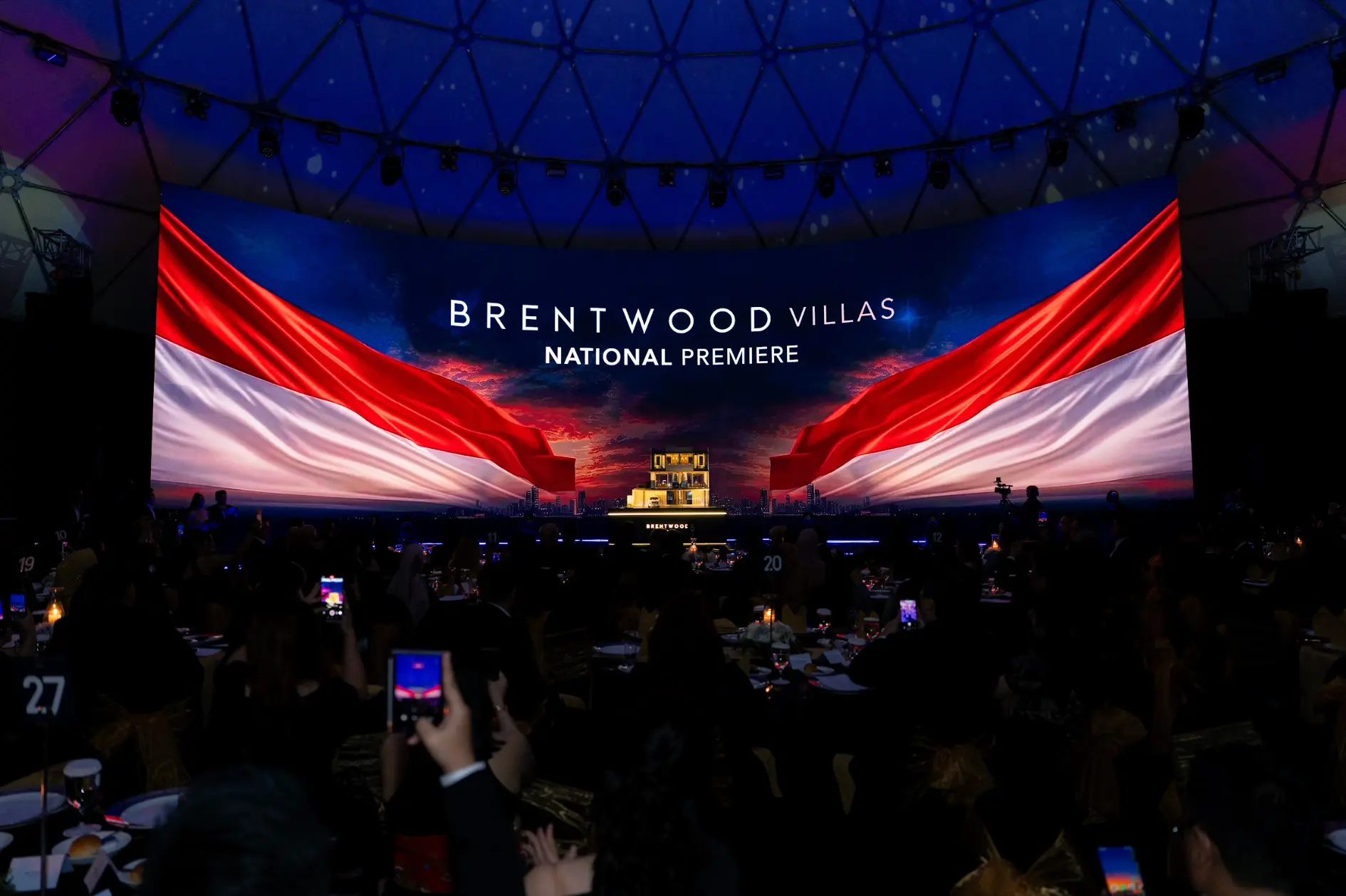
One representation of this approach is Brentwood Villas, premium designer homes that will be introduced in seven locations across Indonesia.
Brentwood Villas: Premium Vertical Villa Living
Brentwood Villas is part of LippoLand's continuous improvement, or Kaizen, and one of the ways the company's 39 years of experience is translated into a living concept that fits the aspirations of today's consumers.
Designed as a new standard of premium housing for multigenerational families, Brentwood Villas combines design, function, quality, and long-term value in a single living experience. The concept offers two- or three-storey homes, allowing two to three generations to live together while each having space and functions suited to their own needs.
On the three-storey option, each level is designed with a different function. The Heritage Level on the first floor is prepared as a space for grandparents, and is also equipped with a Service Quarter. The Entertainment Level on the second floor serves as the center of family interaction, with a Great Room that unites the living room, dining room, and kitchen in a space flowing from the front to the back of the house, supported by natural lighting, cross ventilation, and a balcony. Meanwhile, the Sanctuary Level on the third floor is designed as a space for rest and study, with a Master Bedroom Suite equipped with an Ensuite Bath and two children's bedrooms, each with its own Ensuite Bathroom.
A two-storey option is also available for families who need a home configuration for two generations. At several locations, Brentwood Villas also offers special views such as mountains, lakes, or golf courses.
This concept is the basis for naming Brentwood Villas as “Vertical Villas,” an approach to housing that brings the villa experience into a vertical configuration, while allowing multigenerational living to take place under one roof in a more structured space.
LippoLand CMO Jopy Rusli said Brentwood Villas was developed with a view to the changing consumer aspirations toward a home.
“Today, a home is no longer judged only by its size or location. Consumers increasingly consider how a home supports daily life. We present Brentwood Villas to respond to this change through a combination of design, functionality, quality, and enduring value,” said Jopy.
To realize this vision, LippoLand has partnered with two designers with complementary expertise: Alex Bayu of Genius Loci as home designer and Stephen Flynn of Sheils Flynn Asia as landscape designer. Their collaboration is designed to create a comprehensive premium living experience, from the architecture and interior of the home to the landscape and the surrounding environment.
Designed by Alex Bayu, Brentwood Villas takes a human-centered design approach, with attention to spatial planning, circulation, lighting, the relationship between indoor and outdoor spaces, and the flexibility of space to follow the changing needs of its residents.
Meanwhile, Stephen Flynn, a landscape architect from London-based Sheils Flynn Asia, brings a landscape approach that complements the architectural character and environment of Brentwood Villas, so that the living experience does not end at the building but also encompasses the relationship with outdoor spaces and the surrounding environment.
LippoLand will introduce Brentwood Villas in seven locations across Indonesia. Although each location has a different market and community character, every development will carry the same design philosophy and quality standards.
“Brentwood Villas is not just a new product. It is part of how LippoLand enters its next chapter: understanding consumers more deeply, translating their aspirations into design more carefully, and continuing to improve the quality of the living experience we deliver,” said Jopy.
As it enters its 39th year, LippoLand places relevance, adaptability, partnership, innovation, and the quality of its people as the foundation for its next journey. From a township developer that built Lippo City and Lippo Village at the start of its journey, LippoLand is now expanding its role as a property enabler in Indonesia, using its 39 years of experience to reach more people, build together with partners and stakeholders, and deliver homes and environments that are increasingly relevant to the needs of Indonesian families.